

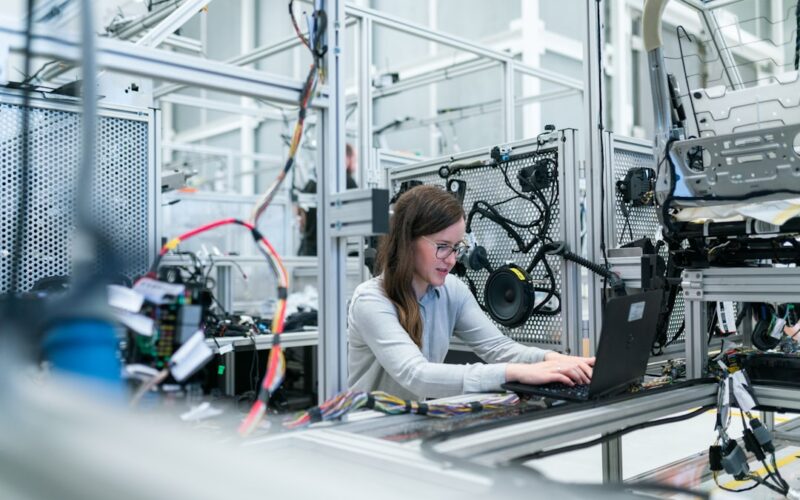
How US Chip Bans Are Building China’s Next Silicon Valley
The irony is sharp enough to cut: Washington’s effort to choke off China’s access to advanced semiconductors may be doing the opposite of what policymakers intended. DeepSeek, the Chinese AI lab that stunned the industry with low-cost models trained on restricted hardware, is now reportedly developing its own AI chips. This isn’t a desperate workaround. It’s a strategic inflection point. Every export control tightens the incentive for China to build domestic semiconductor capacity—and over a decade, that compounds into independence that no embargo can unwind.
We’ve been watching this tension play out for years: the US restricts chip sales, China adapts, the restrictions tighten, China invests harder. But DeepSeek’s move signals something different. This is a company that has already proven it can compete on capability despite hardware constraints. Now it’s deciding to eliminate the constraint entirely by going vertical. That’s not containment; that’s acceleration.

The Export Control Trap
The logic behind US semiconductor export controls is understandable on its surface. Restrict access to cutting-edge GPUs and AI chips, and you slow China’s AI development. Simple leverage.
Except leverage only works if the target has no alternative. China does. DeepSeek demonstrated that capable AI models can be trained with older, sanctioned hardware through smarter engineering—a reality that shook confidence in the export control strategy itself. If restrictions don’t actually stop capability development, what do they do? They create a captive market incentive for domestic chip manufacturing.
The US isn’t forcing China to build its own chips out of desperation. It’s providing the business case. Every dollar of revenue DeepSeek can’t spend on Nvidia or Huawei chips is a dollar that could fund in-house semiconductor R&D. And unlike a startup burning venture capital, DeepSeek has revenue, scale, and the backing of Chinese capital markets eager to fund strategic independence.
This is where policy gets tricky. Containment strategies work best when the target has few alternatives and little motivation to develop them. When you remove the first condition, you guarantee the second.
Why DeepSeek’s Chip Play Is Different from Previous Attempts
China has tried vertical integration in semiconductors before. Not all efforts are equal.
What’s different about DeepSeek isn’t just that it’s trying—it’s how it’s positioned to try. The company has already proven its engineering competence in AI model development under constraints. It understands the specific hardware bottlenecks because it’s lived them. This isn’t a government mandate handed down with unclear requirements; it’s an engineering team solving a problem it actually has.
There’s also the matter of design vs. manufacturing. DeepSeek doesn’t necessarily need to build fabs. Designing optimized chips for your own workload, then contracting manufacturing to TSMC or Samsung (if geopolitics permits), or to domestic capacity (if it doesn’t)—that’s a far easier path than competing with Intel or AMD across the full spectrum of computing.
The company’s existing track record suggests it won’t half-measure this. The same obsessive optimization that made its models efficient under hardware constraints will likely carry over to chip design.
The Unintended Acceleration
Here’s the uncomfortable truth for policymakers: export controls might actually be accelerating the timeline for Chinese semiconductor self-sufficiency rather than delaying it.
Every restriction creates a clear ROI case for investment. Every public announcement that a new chip is being added to the banned list tells Chinese capital: “This technology matters. Fund whoever can replicate it domestically.” The policy sends a price signal that overrides normal market logic. A startup building chips domestically might struggle to raise capital on commercial merit alone. But a startup building chips to break a US embargo? Money finds it fast.
We’re not claiming this is certain to succeed—semiconductor design is brutally hard, and catching up to Nvidia’s lithography and architectural advantages will take time and capital. But the direction of travel is clear. And once a company as visible and well-funded as DeepSeek commits publicly to chip development, it becomes a focal point for talent, funding, and supply-chain localization. The ecosystem builds around it.
That’s not containment. That’s investment infrastructure dressed up in the language of restriction.
What Success Actually Looks Like (Spoiler: It’s Not What We Think)
If we’re being honest, both sides have misunderstood what the endgame is.
The US framed this as preventing Chinese AI dominance. But an embargo doesn’t prevent dominance—it just incentivizes self-sufficiency. In five to ten years, China won’t need US chips because it will have built its own. They might be slightly behind the cutting edge. That’s fine. DeepSeek has already shown that “slightly behind” is enough to build world-class AI.
Meanwhile, China isn’t racing to “beat” the US on semiconductors in absolute terms. It’s racing to decouple. Decoupling from US supply chains doesn’t require technological supremacy. It just requires adequacy plus domestic control.
And that’s the real outcome this policy is building toward: a bifurcated global semiconductor ecosystem where China has its own competitive stack for AI chips and the US maintains a parallel stack. That outcome is probably inevitable anyway. The export controls just accelerate the timeline.
Bottom Line
DeepSeek’s chip ambitions aren’t a sign that export controls failed—they’re evidence of how they work. Restrictions create incentives, incentives direct capital, and capital builds capacity. In semiconductors, that process takes years, but it’s relentless.
If you want to know what the next decade of US-China tech competition looks like, watch this space. It won’t be a US victory or a Chinese one. It’ll be fragmentation that neither side fully planned for, built brick by brick through policies that made the other side self-reliant by accident.
—
Related reading on HighTechz
- AI Personas: The Loophole Dodging Hollywood Labor Wars
- South Koreas Chip Workers: Status as Strategy
- Midjourney Forces Studios to Reveal Their Own AI Use
Editor’s note: This article was researched and drafted with AI assistance (Claude), edited for accuracy and voice, and reviewed before publication. Source headlines that informed our analysis are linked inline. If you spot a factual error, let us know.
