

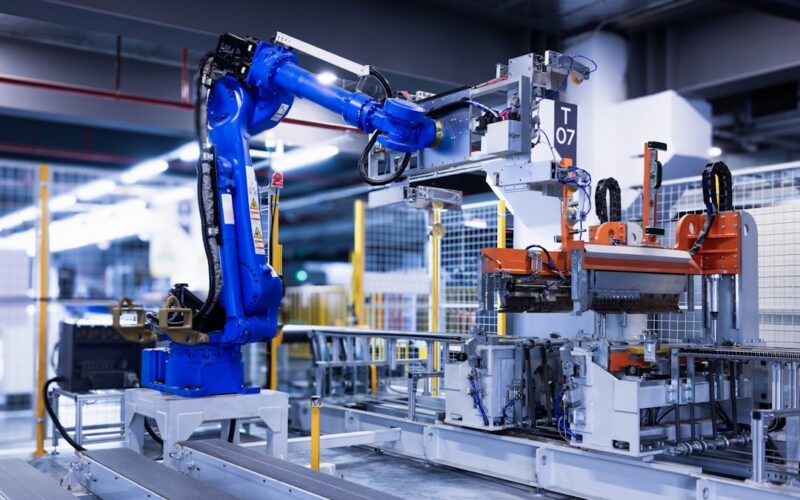
When AI Leaves the Screen: Google’s Embodiment Gamble
A robot picks up a watering can. Another sweeps trash into a dustpan. In the demo videos, they move with an unsettling grace—not the jerky, scripted motions of industrial arms, but fluid, adaptive responses to a dynamic environment. This is Google’s Gemini Robotics 2, and it marks a threshold moment in AI development that we should be paying close attention to.
Per Engadget, the platform enables “intelligent whole-body control” across humanoid robots. But here’s what matters more than the marketing language: we’re watching AI transition from something that lives on a server and outputs text into something that physically manipulates the material world. That shift doesn’t just change the technology—it exposes a regulatory vacuum that may become impossible to ignore when the first serious accident happens.
The Real Leap Isn’t Intelligence—It’s Agency
When an AI chatbot hallucinates a legal precedent, users get bad advice. When an AI image generator infringes on copyright, courts figure it out slowly. These are problems, sure, but they’re problems we’ve been learning to manage because the harms are contained to information space.
Physical embodiment is different. A robot controlled by a Gemini Robotics 2 instance doesn’t just process information about the world—it acts on it. The robot’s decisions have physical consequences. If the model misinterprets a task, a hand moves wrong. If it misjudges spatial relationships, objects break or people get hurt.
Per Wired, the platform represents a “significant jump into physical AGI,” and the article explicitly flags that “plopping AI into the real world comes with risks.” But risk acknowledgment is not the same as risk mitigation. Google’s announcement video doesn’t show the failure modes. It doesn’t show what happens when the model confidently performs the wrong action, or when it gets stuck in a loop, or when it encounters a scenario outside its training distribution.
We’ve stress-tested language models for bias and hallucination. We’ve built red-teaming exercises for image generators. But has anyone actually spent months cataloging what a robot fails at? What edge cases cause it to hang? How does a whole-body control system behave when its confidence scores are low but not zero?

The Liability Question Nobody’s Asking
Here’s the gap that should terrify product leaders and regulators alike: who is responsible when a Gemini Robotics 2-powered robot causes harm?
Is it Google, for training the model? Is it the robotics company that integrated the platform? Is it the facility manager who deployed it? Is it the person who gave it ambiguous instructions? In the software world, we’ve spent decades sorting this out through EULA clauses, warranty disclaimers, and open-source licensing. It’s still messy, but there’s precedent.
With physical systems, liability becomes concrete—literally. If a robot injures a worker, you can’t patch the behavior with a software update released to 2 billion devices simultaneously. You might need to physically recall units. You might need to retrain them from scratch. You might face criminal negligence charges.
Per the DeepMind blog, the platform brings “whole-body intelligence to robots,” but there’s no corresponding discussion of whole-body responsibility. Google is a company that knows how to navigate regulation—it has armies of lawyers and compliance teams. But even it seems to be moving faster than the frameworks that would govern this technology are being built.
Why This Matters More Than the Tech Itself
The technical achievement of Gemini Robotics 2 is real. Getting a single model to reason about manipulation across multiple joints, in real environments, with visual feedback, is genuinely hard. But the tech isn’t the story we should be fixating on.
The story is that a major AI company is deploying embodied intelligence into warehouses, offices, and potentially homes—and the legal, safety, and ethical structures around that deployment are essentially nonexistent. We don’t have:
– Standard testing protocols for physical AI systems (beyond individual company benchmarks)
– Clear liability chains when something goes wrong
– Transparent failure rate documentation (what percentage of tasks does the robot fail at? In what conditions?)
– Human override mechanisms that are actually effective and monitored
– Regulatory frameworks that apply to autonomous physical systems that make decisions
This isn’t a ding on Google specifically. It’s an indictment of how quickly embodied AI is moving relative to our capacity to govern it.
The Real Timeline
If you’re waiting for Congress to pass an “AI Robot Safety Act” before this becomes urgent, you’re already behind. Deployment happens first. Regulation follows accidents. We’re seeing that pattern play out with autonomous vehicles—which at least stay mostly on roads where failure modes are somewhat predictable.
Robots in warehouses and offices interact with unpredictable humans, fragile objects, and scenarios that no training set can fully cover. The lawsuits will come later. The serious conversations about governance should be happening now.
Bottom line: Gemini Robotics 2 isn’t just a cool AI demo. It’s a forcing function for a conversation we’ve been avoiding. If we care about safe deployment of embodied AI, we need to start treating whole-body control with the same rigor we (eventually) applied to nuclear power, aviation, and autonomous vehicles. That means transparency about failure modes, clear liability frameworks, and honest stress-testing for scenarios that make us uncomfortable. Google’s technical achievement is solid. Its governance strategy is still missing in action.
—
Related reading on HighTechz
- Big Techs DSA Data Stonewalling Strategy Exposed
- ChatGPT Health Medical Advice Regulatory Gap
- AI Agent Credential Management Crisis Ahead
Editor’s note: This article was researched and drafted with AI assistance (Claude), edited for accuracy and voice, and reviewed before publication. Source headlines that informed our analysis are linked inline. If you spot a factual error, let us know.
