

NASA’s SpaceX Dependency Is Now a Safety Issue
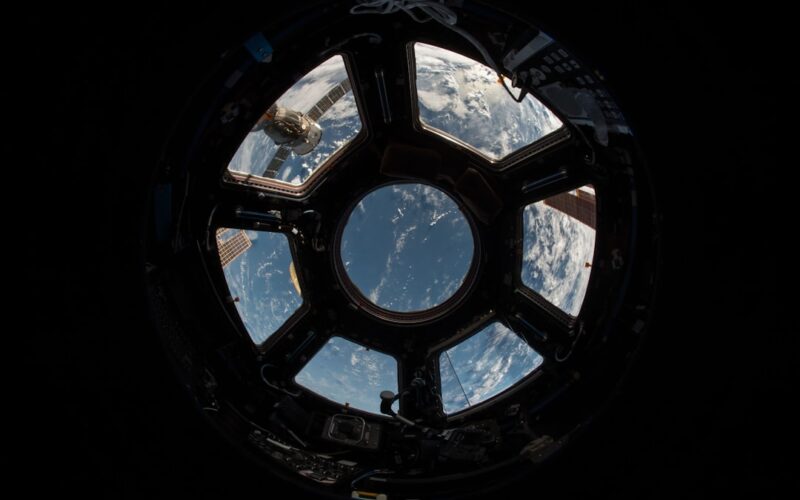
When astronauts had to shelter inside a SpaceX Dragon capsule last week because of air leaks in the International Space Station, nobody called it what it was: a contingency that should never have had to exist. Per TechCrunch, Roscosmos discovered new leaks in the Russian service module, forcing a temporary evacuation of parts of the station. The fix wasn’t a NASA system kicking in. It wasn’t a backup from a partner agency with decades of independent capability. It was a commercial spacecraft—one that exists primarily to ferry cargo and crew for profit—doing emergency shelter duty because NASA no longer has a viable alternative.
This isn’t a story about SpaceX’s competence. It’s a story about what happens when a public space agency outsources its sovereignty.
The Dependency Nobody Planned For
The ISS was built as a collaborative achievement: American, European, Russian, and Japanese systems working in parallel, each capable of independent operation in theory. That design philosophy meant NASA didn’t have to rely on any single partner for survival. In practice, that independence eroded the moment the Space Shuttle program ended in 2011. Suddenly, NASA had no American human spaceflight capability. For years, astronauts rode Russian Soyuz capsules to the station—a dependency that worked fine until geopolitics complicated it.
Ars Technica noted that NASA said it looks forward to working with Roscosmos on addressing the leaks, which is diplomatic language for “we need the Russians to fix their side of the station, and they’re our only real option for now.” The station orbits above all borders, but the infrastructure beneath it is carved up by geopolitical boundaries that suddenly matter when something breaks.
Enter SpaceX’s Dragon. Elon Musk’s company has done legitimate work here—it restored American launch capability after a decade-long gap. But in doing so, NASA swapped one dependency for another. Instead of relying on Roscosmos and the Russians, they’re now relying on a single commercial company whose stock price, leadership drama, and quarterly performance are now variables in American space safety.
The Problem With Outsourcing Emergency Systems
When Dragon became a viable lifeboat during the air leak crisis, it did so not because NASA designed it that way, but because it happened to be docked at the station. That’s not a redundancy—that’s luck dressed up as infrastructure.
A true emergency system is purpose-built, maintained independently, tested regularly, and funded regardless of market conditions. NASA used to have those. Skylab had back-up systems. The Shuttle carried rescue vehicles. The ISS in its original architecture had multiple pathways for crew evacuation that didn’t depend on a single commercial partner’s business model.
What we’re seeing now is the opposite. NASA has structured its human spaceflight operations around commercial availability. If SpaceX experiences a launch failure, loses funding, pivots to Mars tourism, or faces regulatory hurdles, the station loses its lifeboat. NASA isn’t paying SpaceX annually for “maintain a capsule at the dock for emergencies.” They’re paying for cargo delivery and crew rotation on a contract basis. The emergency capability is a side effect, not a design feature.
There’s also the uncomfortable question of leverage. If there’s a catastrophic leak tomorrow and astronauts need to evacuate, NASA isn’t negotiating from a position of strength with a commercial partner. They’re asking for access to a critical piece of infrastructure they don’t own and can’t control.
What NASA Actually Needs
This isn’t an argument against commercial spaceflight. SpaceX has proven capability that’s real and valuable. The problem is that NASA has treated commercial partnerships as a substitute for independent capability rather than a complement to it.
A functional space program—especially one responsible for human life—needs:
– Multiple independent crew return vehicles, not one commercial option
– Funding for long-term infrastructure redundancy, not reliance on quarterly earnings reports
– Transparent design standards that aren’t proprietary to a single contractor
– International partnerships that distribute risk, not concentrate it
That costs money. Lots of it. More than Congress seems willing to allocate in most budget cycles. But the cost of not having it—the cost of last week, when astronauts had to shelter in a commercial capsule because NASA had no other option—is a space program that exists at the pleasure of private companies and geopolitical accidents.
The Unstated Problem
Here’s what bothers us most: this crisis is being treated as a one-off rather than a symptom. NASA issued statements about collaboration with Roscosmos. SpaceX got some good PR. The astronauts were safe, the leak was managed, and the story moves on.
But nothing about the underlying dependency changed. Six months from now, if there’s another crisis, NASA will again scramble to coordinate with either a Russian agency they’re partially sanctioned from working with or a commercial company operating under business logic that isn’t always aligned with national safety interests.
What to Watch
The real test isn’t whether SpaceX can handle one emergency. It’s whether NASA will use this incident as a forcing function to rebuild independent capability—which almost certainly means a new lifeboat system, funded sustainably and developed according to space agency specifications rather than contractor timelines.
Watch for Congressional funding proposals for next-generation crew return vehicles. Watch whether Boeing’s Starliner program gets real resources, because competition, however imperfect, is better than dependence. And watch whether NASA starts treating “redundancy” as a mission requirement rather than a cost item to cut when budgets tighten.
The ISS will probably be fine. But a space agency that can’t solve a crisis without betting everything on a docked commercial vehicle isn’t a space agency anymore—it’s a customer with nowhere else to go.
Editor’s note: This article was researched and drafted with AI assistance (Claude), edited for accuracy and voice, and reviewed before publication. Source headlines that informed our analysis are linked inline. If you spot a factual error, let us know.
