


Polymarket’s Fake-Bet Influencers Just Killed the Credibility Prediction Markets Promised
Imagine a tool that’s supposed to aggregate the wisdom of crowds—thousands of people betting real money on future events—and use that collective signal to answer hard questions about what’s actually going to happen. Now imagine that tool’s operator is paying Instagram creators to film themselves placing bets that don’t exist, celebrating wins that never occurred, all designed to make the platform look busier and more exciting than it is.
That’s not a hypothetical. Per The Verge, Polymarket reportedly paid people to post fake videos of themselves placing bets, and a Wall Street Journal investigation identified over 1,100 deceptive videos. This isn’t a minor marketing stumble. It’s a fracture in the entire epistemic foundation that prediction markets have been quietly building for years—the foundation that now influences how journalists report, how analysts forecast, and increasingly, how policymakers think about probability.
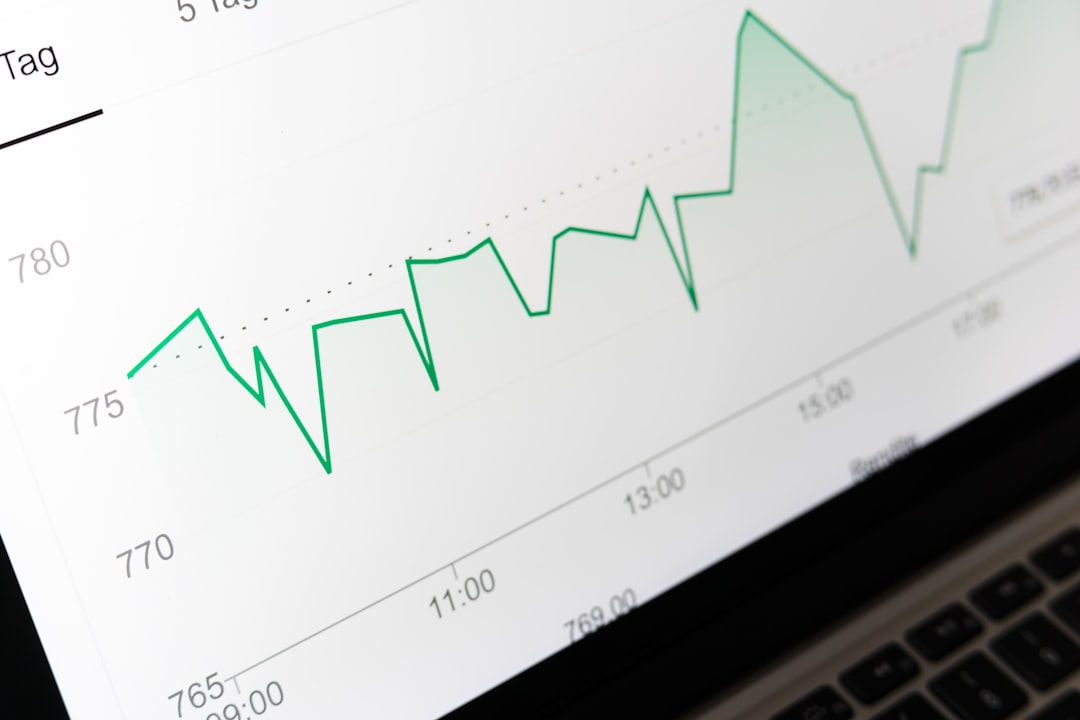
When the Signal Becomes the Noise
Here’s what makes this different from a typical influencer scheme or platform astroturfing: prediction markets work because they’re supposed to be messy, authentic, and driven by real financial skin in the game. The premise is elegant. If you can bet on anything—an election outcome, a company’s IPO price, whether it rains next month—you create a market price that reflects what informed people actually believe will happen. No surveys. No punditry. Just money and conviction.
That model has genuine power. Journalists have started citing prediction market odds as a real-time probabilistic fact-check. Think tanks and policy shops reference them. During elections, they’ve become a parallel data stream to traditional polling. The credibility isn’t from Polymarket’s branding or PR. It’s from the idea that the crowd, when it has money on the line, is harder to fool than the usual sources of forecast data.
Paying creators to film fake bets destroys that signal in a way that’s almost elegant in its damage. The fake videos don’t need to move the actual market price much—they just need to create social proof that makes real users feel like everyone’s winning, everyone’s confident, everyone’s betting. That’s not information aggregation. That’s manufacturing consensus.
The Attention Economy Metastasizes Into Finance
What’s instructive here is how prediction markets have quietly drifted from being a tool for truth-seeking into being another content platform where engagement is the real commodity being traded.
Polymarket’s growth story has always been about virality. Early adopters loved the narrative of decentralized betting disrupting Las Vegas and traditional bookmaking. But sustaining that growth—especially when you’re operating in a regulatory gray zone—requires constant user acquisition and engagement metrics that impress investors. That’s when a platform’s incentives start to misalign with its core function.
The pressure isn’t unique to Polymarket. It’s structural. A prediction market that sits quietly and actually aggregates information efficiently is doing exactly what it should—but it’s boring. It doesn’t go viral. It doesn’t generate TikTok clips of people screaming about their winnings. So instead of competing on accuracy or user trust, platforms start competing on drama, on the sense that you’re missing out, on manufactured proof that everyone else is already winning.
Per TechCrunch, many videos were filmed on near-perfect copies of the Polymarket website, featuring trades and winnings that were not real. That’s not a hack or a mistake. That’s a production choice—building fake interfaces to make fiction look indistinguishable from reality.
Why This Matters Now, Specifically
The timing is what stings. Prediction markets have spent the last two years gaining legitimacy. Major media outlets now treat them as a data source. Academics cite them. Policymakers are genuinely considering them as a tool for better forecasting in government.
That credibility was borrowed from the assumption that prediction markets couldn’t fake their core function—that the money was real, the bets were real, and therefore the signal was honest. Once you accept that the money and bets can be theater, the whole architecture collapses. It’s not that Polymarket might have some bad-faith actors. It’s that the platform itself, the operator you’re supposed to trust to run a clean market, was manufacturing false demand.
The problem with exposing this now is that it happens right when prediction markets are most useful to institutions that don’t have time to rebuild trust. A journalist writing about election odds can’t easily distinguish between a market price that reflects real belief and one that’s been shaped by undetectable astroturfing. A policymaker citing market predictions as supporting evidence for a decision doesn’t have a straightforward way to audit whether the signal is legitimate.
What Prediction Markets Still Could Be
It’s worth noting that the concept of prediction markets—actual markets, run by honest operators—is still sound. The problem isn’t the mechanism. It’s that Polymarket wasn’t actually interested in being a pure truth-aggregation tool. It wanted to be a growth-stage startup, which meant it wanted user engagement metrics, network effects, and hype.
The real test now is whether newer or existing prediction market platforms will actually commit to transparency, independent auditing, and legitimate user acquisition. Or whether they’ll treat this moment the way most tech platforms do: acknowledge the misconduct, blame a few bad actors, promise to do better, and then quietly optimize along the same dimensions once the story fades from headlines.
Bottom Line
Prediction markets aren’t broken as a concept, but Polymarket has broken the trust that allows them to function. If you’re citing prediction market odds in your reporting or decision-making, you now have to ask: is this price discovery, or is it performance? That’s a question that shouldn’t exist at all—and the fact that it does means the epistemic moment prediction markets were supposed to enable has already passed.
—
Related reading on HighTechz
- Prime Day Isnt a Sale—Its Amazons Data Harvest
- Norway AI Classroom Ban: Who Controls How Kids Learn?
- AI Gets Grid Fast Lane While Workers Face Investigations
Editor’s note: This article was researched and drafted with AI assistance (Claude), edited for accuracy and voice, and reviewed before publication. Source headlines that informed our analysis are linked inline. If you spot a factual error, let us know.
