
hightechz.net

62 Posts
Meta’s Smart Glasses Could Become Cops’ Best Tool

Meta’s Smart Glasses Could Become Cops’ Best Tool

Your Next Glasses Might Be a Cop's Best Informant Meta is testing facial recognition software on consumer smart glasses—the kind used by police and the military. This isn't speculation or a privacy advocate's nightmare scenario. It's happening quietly right now, with consumer devices. And it's the clearest signal yet that the smart glasses race isn't about helping you answer emails hands-free or finding that restaurant you half-remembered. It's about building the world's most intimate surveillance network—and we're being asked to fund it with our eyeballs. The timing matters. As Qualcomm rolls out more powerful chips designed specifically to power next-generation…
Read More
SpaceX’s $60B Cursor Deal Reveals Antitrust’s Blind Spot

SpaceX’s $60B Cursor Deal Reveals Antitrust’s Blind Spot

SpaceX Isn't a Rocket Company Anymore. That Should Scare Us. A freshly public SpaceX just deployed its IPO windfall to acquire Cursor, an AI coding platform, for $60 billion in stock. The speed and scale of the move—closing days after the IPO—signals something larger than a strategic partnership. It's a flex of vertical integration ambition that our current antitrust framework has no real answer for. We're watching the blueprint for a new kind of tech monopoly unfold in real time, and regulators are still arguing about Amazon's warehouse deals. Photo by SpaceX on Unsplash The Rocket Company That Became a…
Read More
Cord-Cutting Is Over: Fox-Roku Is Legacy TV’s Return

Cord-Cutting Is Over: Fox-Roku Is Legacy TV’s Return

Cord-Cutting Is Over: Fox-Roku Is Legacy TV's Checkmate When Fox announced it would acquire Roku for $22 billion, the streaming industry collectively misread the signal. The headlines framed it as a "powerhouse" merger—Fox bolstering its streaming footprint, Roku cementing its role as a platform. But that's backwards. This deal isn't about competing in streaming. It's about cord-cutting's quiet death and legacy media's long game finally coming into focus. We spent a decade watching cable collapse and celebrating the end of forced bundles. Turns out, that détente was never permanent. It was just legacy media catching its breath while it figured…
Read More
Why a $3M Mario Cartridge Exposes Digital Ownership’s Failure

Why a $3M Mario Cartridge Exposes Digital Ownership’s Failure

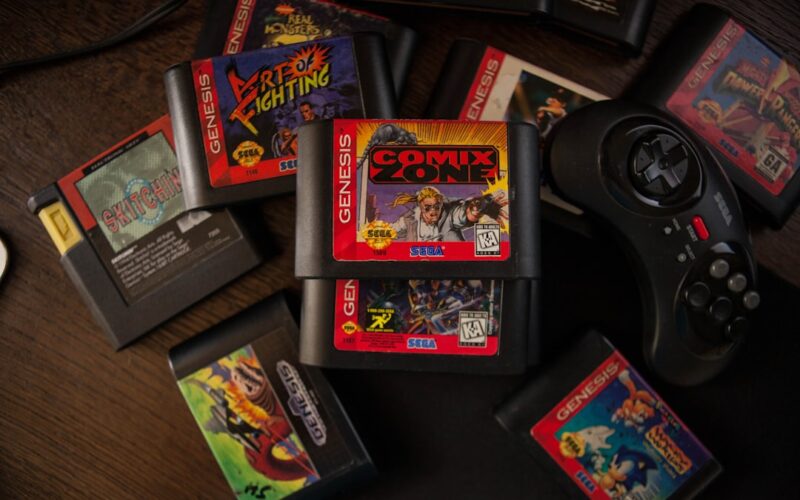
Why a $3M Mario Cartridge Is a Verdict on Digital Ownership A sealed copy of Super Mario Bros. sold at auction recently for $3 million. Let that sink in—not for the headline shock value, but because it tells us something uncomfortable about how we actually own media in 2024. Per Engadget, this cartridge came as part of a $150 console bundle in 1985. The person who paid seven figures wasn't buying a game. They were betting against the future of digital ownership itself. We live in an era where you can "buy" a movie on iTunes, only to watch it…
Read More
State AGs vs OpenAI: Why AI Fragmentation Hurts Accountability

State AGs vs OpenAI: Why AI Fragmentation Hurts Accountability

50 Sheriffs, Zero Playbook: The State AG War on OpenAI A coalition of state attorneys general is now investigating OpenAI. We don't yet know the full roster—per TechCrunch, the exact number and identity of participating states remains unclear—but the scope is sweeping: advertising practices, health data handling, consumer protection violations, the usual suspects. What's notable isn't the investigation itself. It's what it signals about the future of AI governance in America, and why that future might be messier, more expensive, and ultimately worse for accountability than the federal gridlock we've endured for the past three years. Photo by Miles Smith…
Read More
The Government Kill Switch in Every AI Contract

The Government Kill Switch in Every AI Contract

The Government Kill Switch Hidden in Every AI Contract On a Tuesday that will matter far more than most in tech, Anthropic suspended all customer access to Fable 5 and Mythos 5 following a directive from the U.S. government. No warning. No gradual deprecation. No migration period. Just: these models are gone, effective immediately, to comply with national security concerns. This wasn't a product recall. It was a kill switch—and it's the moment enterprise AI deployment stopped being a straightforward product decision and became a geopolitical liability. Photo by Katie Moum on Unsplash The Real Story Isn't About These Two…
Read More
Multi-Agent AI Collision: The Unplanned Risk

Multi-Agent AI Collision: The Unplanned Risk

The Agent Pile-Up: Why Multi-AI Chaos Is the Real Risk We're about to enter an era where millions of AI agents operate simultaneously across email systems, supply chains, trading floors, and recommendation algorithms—none of them designed to acknowledge each other's existence. DeepMind's recent public anxiety about emergent multi-agent interactions should be a wake-up call. The catastrophic risk we should be gaming out isn't a single superintelligent model plotting against humanity. It's the invisible, uncoordinated collisions between autonomous systems we've deployed without ever asking: what happens when they all start talking? Photo by Albert Stoynov on Unsplash This isn't theoretical. As…
Read More
World Cup 2026: How Sports Events Normalize Surveillance

World Cup 2026: How Sports Events Normalize Surveillance

The World Cup Is a Trojan Horse for Permanent Surveillance Next summer, when fans stream toward US World Cup stadiums, they won't just be entering a sporting event. They'll be walking into what may become the nation's largest coordinated deployment of AI-integrated surveillance infrastructure—one that will likely outlast the final whistle by years. Wired mapped Flock license plate readers stationed around every major venue, while Google is using the Argentine national team as a live testing ground for Gemini AI. The message is clear: mega-sporting events have become the fastest, least-scrutinized path to normalizing surveillance systems that become permanent civic…
Read More
Cities Push Back on Data Center Land Grab

Cities Push Back on Data Center Land Grab

Cities Are Finally Saying No to the Data Center Land Grab Seattle just did something that felt unthinkable two years ago: it hit pause on data centers. Per Engadget, the Seattle City Council has approved a moratorium on the construction of large data centers, signaling that municipalities are starting to push back against the relentless appetite of Big Tech's infrastructure buildout. Meanwhile, General Motors isn't waiting for permission—the company is developing sodium-ion battery chemistry for use in data centers and the grid, betting that solving the power problem is how you win the right to build more of them. These…
Read More
AI Voice Translation: Convenience vs. Cultural Learning

AI Voice Translation: Convenience vs. Cultural Learning

When AI Speaks for You, What Do You Lose? You're in a Tokyo restaurant. The chef doesn't speak English. Ten years ago, you'd fumble through a phrasebook, mime your order, maybe laugh at yourself. Today, you hold up your phone, speak into it, and an AI voice—matching your tone and pace—asks for the omakase in near-perfect Japanese. The chef understands immediately. Problem solved. Except the problem was never really the problem. Google's latest voice translation tech, which preserves a speaker's tone, pacing, and pitch while translating in real time, marks a threshold moment in how we think about language and…
Read More